


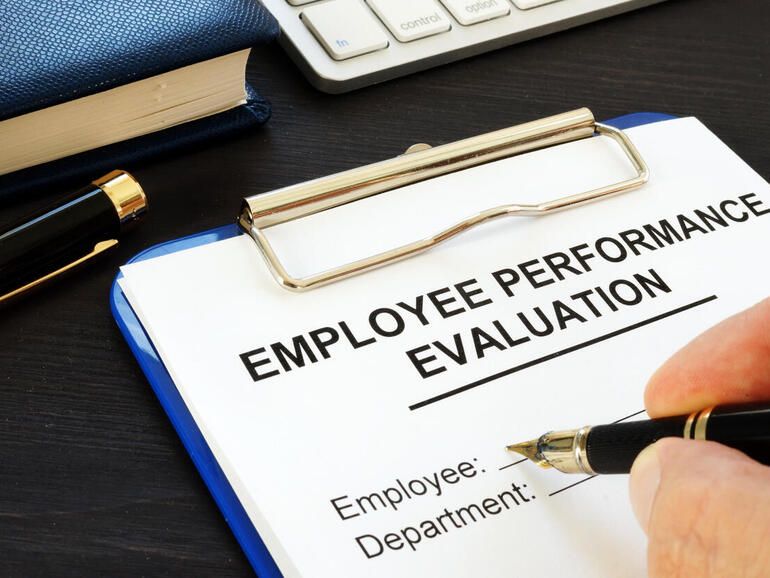
Employee performance management in Kenya is essential for businesses that want to improve productivity, strengthen accountability and align employee contributions with organisational goals. A well-structured performance management system helps employees understand expectations while enabling managers to identify performance gaps, provide feedback and support professional development.
However, performance management should not be limited to annual appraisals or conversations that take place only when an employee is underperforming. It is an ongoing process of setting clear targets, monitoring progress, addressing challenges and recognising achievement.
This illustrative case study examines how a growing Kenyan business could improve employee performance through clear key performance indicators (KPIs), regular reviews, targeted training and a structured approach to performance improvement.
Case Study: A Kenyan Business Struggling With Employee Performance
Consider a hypothetical medium-sized business with sales, administrative and operational teams.
Management notices inconsistent sales results, delays in completing administrative tasks and gaps in customer follow-up. Some employees meet their targets, while others repeatedly fall short of expectations.
The initial response is to remind employees to work harder. However, the problems continue.
On reviewing the situation, management discovers that employees have different interpretations of their responsibilities. Some have written targets, while others are assessed using general expectations. Feedback is inconsistent, and there is limited documentation of performance discussions or agreed improvement actions.
The business realises that it needs a structured employee performance management system rather than relying solely on verbal reminders.
1. Setting Clear Employee Performance Targets
The first step is to establish what good performance looks like for each role.
The business reviews its organisational objectives and translates them into specific employee responsibilities and measurable performance indicators.
For example, a sales employee may be assessed on agreed sales targets, lead follow-up, customer relationship management and the accuracy of sales records.
An administrative employee may be assessed on completing tasks within agreed deadlines, maintaining accurate records and organising documents effectively.
A customer service employee may be assessed on response times, the quality of customer interactions, adherence to procedures and the timely resolution of enquiries.
These indicators should reflect the actual responsibilities of each position. Applying identical KPIs to employees with different duties can produce misleading results.
Managers can use the SMART framework to set goals that are specific, measurable, achievable, relevant and time-bound.
Key lesson: Employees need clear expectations before their performance can be assessed fairly.
2. Using KPIs to Measure Employee Performance
The business establishes relevant KPIs for each department and agrees on how progress will be measured.
Before setting new targets, management reviews available records to establish a baseline. Depending on the role, this may include sales reports, task completion records, customer feedback, error rates and response times.
Targets should reflect the employee’s responsibilities, available resources, workload and level of experience.
For example, a target for completing customer enquiries should consider the volume and complexity of enquiries handled. A sales target should account for the agreed sales cycle and other factors relevant to the role.
Where reliable historical data is unavailable, the business can begin collecting it and review provisional targets as better information becomes available.
A useful performance management system measures both the quantity and quality of work. Completing many tasks is not necessarily good performance if those tasks contain repeated errors or fail to meet required standards.
Key lesson: Effective employee KPIs measure meaningful outcomes rather than activity alone.
3. Introducing Regular Performance Reviews
Instead of waiting for an annual appraisal, the business introduces structured performance check-ins.
During these meetings, managers review progress, recognise achievements, identify obstacles and agree on actions for the next review period.
A monthly performance review could cover:
- Progress against agreed KPIs and targets.
- Quality of work and recurring errors.
- Challenges affecting performance.
- Training, coaching or resources required.
- Actions agreed upon and the next review date.
Regular feedback allows managers to address problems before they become persistent. It also gives employees an opportunity to explain operational challenges and request support.
The process should encourage constructive discussion rather than focus exclusively on shortcomings.
Businesses can strengthen this process through a tailored performance management service that supports clear objectives, employee appraisal processes and performance tracking.
Key lesson: Performance reviews are most useful when they lead to clear actions and follow-up.
4. Addressing Underperformance Through a Structured Process
During the review process, the business identifies an employee who has consistently missed an agreed performance target.
Rather than immediately assuming that the employee lacks commitment, the manager examines the evidence and discusses the concerns with the employee.
The discussion considers whether the expectations were clear, whether adequate training was provided, whether the employee had the necessary resources and whether workload or other operational factors affected performance.
Where improvement is needed, the manager and employee agree on specific actions, measurable expectations, appropriate support and a review date.
A performance improvement plan (PIP) may be appropriate when underperformance is persistent and requires a formal, documented process.
A performance improvement plan should identify:
- The specific performance gaps and supporting examples.
- The expected standard of performance.
- The coaching, training or other support to be provided.
- The time frame for improvement.
- How progress will be measured.
- The review arrangements and possible next steps.
The employee should understand the concerns, the required improvement and the support available. Discussions and agreed actions should be documented consistently.
A PIP should not be used as a substitute for a fair disciplinary process where a separate disciplinary issue arises. Employers should follow applicable employment requirements and their established procedures.
Key lesson: Performance improvement should be evidence-based, documented and focused on clear expectations and appropriate support.
5. Linking Employee Training to Performance Gaps
The business discovers that some performance challenges are caused by capability gaps rather than unwillingness to perform.
For example, an employee may need additional product knowledge, customer service training, improved spreadsheet skills or guidance on prioritising tasks.
Management identifies suitable interventions based on the specific gaps observed.
This is where employee training and development can complement performance management.
Rather than arranging training simply to meet an annual training requirement, the business connects learning activities to identified workplace needs.
After training, the manager reviews relevant indicators to assess whether the intervention has helped. Depending on the role, this may include work accuracy, customer feedback, adherence to procedures or completion of assigned tasks.
Training attendance alone does not demonstrate improved performance. The organisation should assess whether employees can apply what they have learned.
Key lesson: Training is more effective when it addresses a defined performance gap and its impact is reviewed.
6. Monitoring Progress and Evaluating Results
Once the performance management process is introduced, management reviews progress against the original baseline.
In this illustrative scenario, the business could track the percentage of targets achieved, completion of tasks within agreed deadlines, error rates, customer response times and the completion of scheduled performance reviews.
The review should identify which interventions appear helpful, where challenges remain and whether targets need to be adjusted.
Management should avoid assuming that every change is the result of the performance management system. Other factors, such as changes in demand, staffing levels, resources or market conditions, may also affect results.
Useful measures may include:
- Percentage of employee targets achieved.
- Timely completion of assigned tasks.
- Quality and accuracy of work.
- Customer response and resolution times.
- Training needs identified and addressed.
- Completion of performance reviews and agreed actions.
The measures should be appropriate to each role and should focus on outcomes employees can reasonably influence.
Key lesson: Performance management should be evaluated using relevant evidence, not assumptions.
What This Case Study Teaches Kenyan Employers
Although this case study is illustrative and does not report measured results from a real client, it highlights practical lessons for businesses seeking to improve employee performance.
Clear expectations support accountability. Employees need to understand their responsibilities and how success will be measured.
Consistent feedback helps identify problems early. Regular reviews create opportunities to recognise progress and address concerns before they become more difficult to resolve.
Underperformance requires investigation. Managers should distinguish between skills gaps, unclear expectations, resource constraints and other possible causes before deciding on an intervention.
Training should address actual needs. Targeted development is more useful when it responds to identified performance gaps.
Documentation supports consistency. Records of agreed targets, feedback, support and follow-up actions help managers make informed decisions and apply procedures more consistently.
These practices do not guarantee immediate improvements. Their effectiveness depends on appropriate targets, management capability, employee engagement and consistent implementation.
Employee Performance Management and Employment Practices in Kenya
An employee performance management system should support legitimate business objectives while treating employees fairly and consistently.
Employers should communicate expectations clearly, use relevant evidence when assessing performance and give employees an appropriate opportunity to respond to concerns.
Where performance issues may lead to disciplinary action or termination, organisations should follow applicable employment law and established procedures. The Employment Act, 2007 is an important reference for Kenyan employers and can be accessed through the Kenya Law website.
Organisations should also ensure that employee performance records are handled appropriately and access is restricted to authorised individuals.
Where a business lacks the internal capacity to manage these processes, professional HR support can help establish suitable policies, documentation and review procedures.
How Powervision Consultancy Supports Employee Performance Management
At Powervision Consultancy, we recognise that effective performance management requires more than setting targets. Businesses need appropriate processes, capable managers, clear documentation and support for employee development.
Our performance management services can help organisations strengthen performance appraisal processes, establish relevant KPIs and SMART goals, and improve performance tracking.
Businesses seeking broader workforce support can also explore our HR outsourcing services.
The right approach begins with understanding the organisation’s objectives, the responsibilities of each role and the specific challenges affecting performance. From there, a tailored system can help managers move from general expectations to clearer targets, constructive feedback and better-informed decisions.
Explore more practical HR guidance on the Powervision Consultancy blog.
Conclusion: Building a Stronger Performance Management System
Employee performance management in Kenya should be an ongoing process of setting expectations, reviewing progress, addressing challenges and supporting development.
For growing businesses, a structured approach can help strengthen accountability, clarify individual responsibilities and ensure that performance concerns are addressed consistently.
The priority is to establish meaningful measures, communicate expectations, provide appropriate support and review progress regularly.
Better performance begins when employees understand what is expected, have the resources to succeed and receive constructive feedback on their progress.
Is your organisation’s performance management system helping employees improve, or does it mainly identify problems after they occur?
Contact Powervision Consultancy to discuss practical performance management and HR support for your organisation.
Powervision Consultancy — Your People, Our Expertise. A Stronger Tomorrow.
#PerformanceManagement #HRKenya #EmployeePerformance #HumanResourceManagement #EmployeeDevelopment #PowervisionConsultancy
Related Posts

October 21, 2026
HR Compliance in Kenya: 7 Areas Every Employer Should Review
HR Compliance in Kenya: 7 Areas Every Employer Should Review HR compliance is an important…

October 12, 2026
payroll-management-mistakes-kenya
Payroll Management in Kenya: Common Mistakes Businesses Should Avoid Payroll is one of the most…

October 5, 2026
Employee Data Privacy in Kenya: What Employers Need to Know About HR Records
Every employee generates information during their relationship with an organisation. This can include: Names Contact…

September 30, 2026
Workforce Planning in Kenya: How Businesses Can Plan the Right Team for Growth
Business growth requires more than financial planning, sales targets and operational strategies. It also requires…

555329
October 13, 2026Hi,how are you
admin
October 13, 2026Hello
pornip
October 19, 2026Its Amazing
www.555329.com
October 21, 2026If you are mad at me, just curse me out