

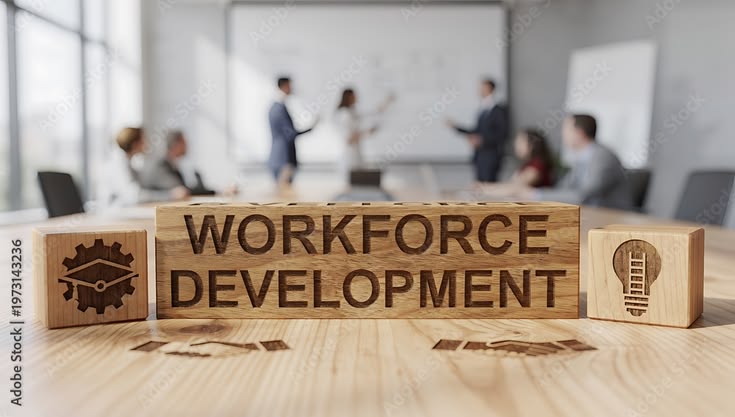
Business growth requires more than financial planning, sales targets and operational strategies. It also requires businesses to understand who they need, what skills they need and when they will need them.
This is where workforce planning in Kenya becomes important.
A business may have ambitious expansion plans, new branches to open, new products to launch or additional customers to serve. But if the organization does not have enough employees with the right skills, those plans can become difficult to execute.
Workforce planning provides a structured way for businesses to connect their business objectives with their people requirements.
The International Labour Organization’s current HR strategy also demonstrates the connection between workforce planning, talent development, leadership and organizational effectiveness.
What Is Workforce Planning?
Workforce planning is the process of assessing an organization’s current workforce and determining what employees, skills and capabilities will be required to meet future business objectives.
It involves looking at questions such as:
- How many employees do we currently have?
- What roles are critical to the business?
- Where are our skills gaps?
- Which positions may become necessary as the business grows?
- Which employees may require additional training?
- When should we recruit?
- What workforce costs can the business support?
The objective is not simply to hire more people.
The objective is to have the right people, with the right skills, in the right roles, at the right time.
Why Workforce Planning Matters for Kenyan Businesses
1. It Helps Businesses Identify Staffing Gaps
A business may discover that its current team is operating at capacity.
For example, a growing company may have enough sales staff but not enough customer service, finance, operations or supervisory capacity to support the additional workload.
Workforce planning allows management to identify these gaps before they become operational problems.
2. It Supports Business Growth
When a company plans to open another branch, enter a new market or increase production, the workforce requirements should be considered alongside the financial and operational requirements.
For example, expansion may require:
- Additional managers
- Sales employees
- Customer service staff
- Drivers
- Technical employees
- Finance personnel
- HR support
Planning these requirements early gives the business more time to recruit and prepare the necessary workforce.
3. It Identifies Skills Gaps
Not every workforce gap requires recruitment.
Sometimes the business already has employees who could take on new responsibilities if they receive appropriate training.
A workforce review can therefore identify whether a particular gap should be addressed through:
Recruitment → Training → Redeployment → Promotion → Outsourcing
This prevents businesses from automatically recruiting whenever a capability gap appears.
4. It Helps Control Workforce Costs
Employees are an important business investment.
Businesses need to understand not only how many employees they need but also the associated costs, including:
- Salaries
- Statutory obligations
- Recruitment costs
- Training
- Benefits
- Overtime
- Employee turnover
- HR administration
Workforce planning can help management make more informed decisions about when and where additional employees are required.
For broader compensation considerations, businesses can also review our guide on Salary Benchmarking in Kenya.
How to Create a Workforce Plan
Step 1: Understand Your Business Strategy
Start with the business plan.
Ask:
- What are we trying to achieve?
- Are we expanding?
- Are we launching new products?
- Are we opening new locations?
- Are we increasing sales?
- Are we changing our operating model?
Your workforce plan should support these objectives.
Step 2: Assess Your Current Workforce
Create an overview of your current employees.
Consider:
- Job titles
- Departments
- Skills
- Experience
- Performance
- Tenure
- Management responsibilities
- Critical roles
This gives management a clearer picture of the workforce currently available.
Step 3: Identify Future Workforce Requirements
Now compare your current workforce with your future plans.
For example:
Current situation:
A company has one sales team.
Future plan:
The company wants to expand into three additional counties.
The business may then need additional sales representatives, regional supervisors, customer support and operational support.
Step 4: Identify Skills Gaps
Ask:
What capabilities will we need that we don’t currently have?
Some gaps may be addressed through training and development.
You can also review your existing Training and Development services when assessing workforce development needs.
Step 5: Determine Your Recruitment Priorities
Not every vacancy needs to be filled immediately.
Classify positions according to their business importance.
For example:
Critical:
A position that directly affects business continuity.
Important:
A role required to support growth.
Future:
A position that may be needed later as the business expands.
This helps businesses prioritize recruitment resources.
Businesses that require recruitment support can also explore Recruitment & Selection services.
Step 6: Review Your Workforce Regularly
Workforce planning should not be a one-time exercise.
Business conditions change.
New contracts may create staffing requirements. Employees may leave. New technology may change job responsibilities. Expansion plans may change.
Review your workforce plan periodically and update it as business needs evolve.
Workforce Planning and Employee Development
Workforce planning should not focus exclusively on recruitment.
Existing employees are also an important part of the workforce strategy.
Businesses can identify employees who may benefit from:
- Technical training
- Leadership development
- Management training
- Cross-functional training
- Coaching
- Career development
The ILO emphasizes skills development and lifelong learning as important elements in adapting to changes in the world of work.
Workforce Planning vs Recruitment
The two are connected, but they are not the same.
Recruitment focuses on finding and hiring employees.
Workforce planning focuses on understanding the organization’s overall workforce requirements.
Recruitment is therefore one of the tools that can be used to execute a workforce plan.
A business should ideally determine what it needs before deciding whom to hire.
When Should a Business Review Its Workforce Plan?
Consider conducting a workforce review when:
- The business is expanding
- A new branch is opening
- Employee turnover is increasing
- New services are being introduced
- Productivity is declining
- Employees are consistently overloaded
- New technology is changing job requirements
- The organization is restructuring
- A major contract has been secured
- The business is entering a new market
Final Thoughts
A strong workforce plan connects your business strategy with your people strategy.
Instead of waiting for staffing problems to appear, businesses can identify workforce requirements earlier, plan recruitment, develop existing employees and manage workforce costs more deliberately.
For growing businesses, workforce planning can therefore become an important part of long-term HR and business planning.
Need support with workforce planning, recruitment or HR management?
Powervision Consultancy supports businesses through Recruitment & Selection, HR Outsourcing, Training & Development, Workforce Solutions, Performance Management and other HR services.
Explore our Workforce Solutions or HR Outsourcing services.
Powervision Consultancy
People. Performance. Business.
Related Posts

October 21, 2026
HR Compliance in Kenya: 7 Areas Every Employer Should Review
HR Compliance in Kenya: 7 Areas Every Employer Should Review HR compliance is an important…
October 9, 2026
Employee Performance Management in Kenya: A Practical Case Study
Employee performance management in Kenya is essential for businesses that want to improve productivity, strengthen…

October 5, 2026
Employee Data Privacy in Kenya: What Employers Need to Know About HR Records
Every employee generates information during their relationship with an organisation. This can include: Names Contact…

September 25, 2026
How to Build an Effective Performance Management System in Kenya
A business can have talented employees and still struggle to achieve its objectives when expectations…

a66slot
October 6, 2026If you are a fan of video slots you will love how this site is organized. The game providers they partner with bring in fresh titles every month and the themes are always creative. I never ran into lagging screens or loading errors even during peak hours. My favorite part is how smoothly the bonus rounds trigger without any weird delays. a66slot